A helpdesk ticketing system built into your live chat
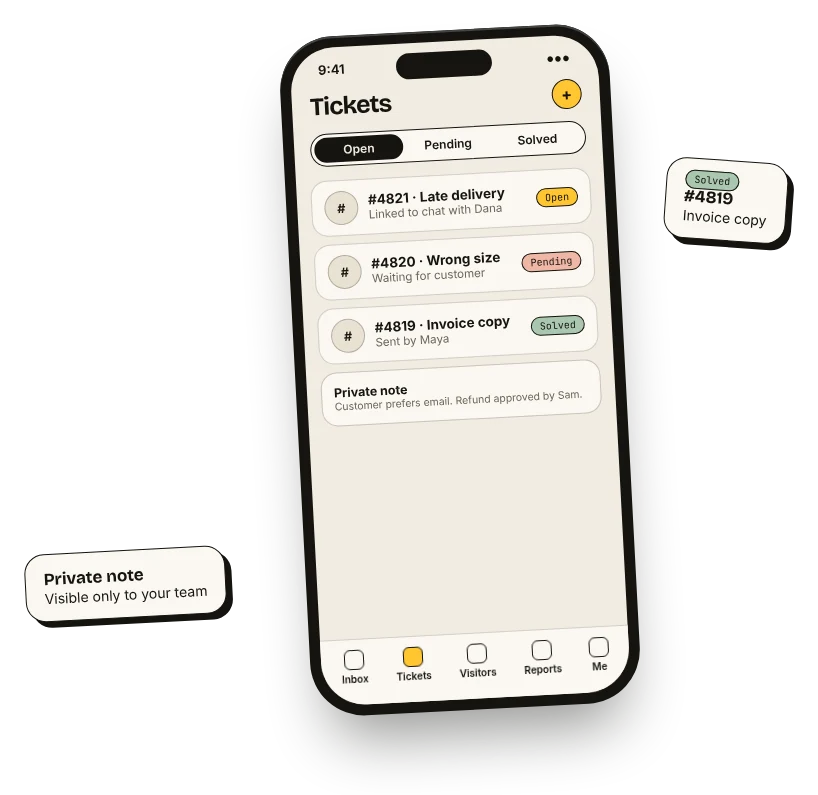
The txt.me helpdesk ticketing system lives inside the same inbox as your live chat. One click turns a conversation into a ticket, the ticket keeps the whole thread, and nothing is forgotten when the agent who started it goes home.
Why chats need a helpdesk ticketing system
Live chat is fast, which is its weakness too. A customer asks why a refund hasn't arrived. The agent has to check with finance, and finance answers tomorrow. By then the chat has scrolled out of sight, the agent is on a different shift, and the customer writes again, more annoyed this time.
A ticket gives that question an owner, a status and a place to wait. Wikipedia describes an issue tracking system as software that "manages and maintains lists of issues" so an organization can see what's open and who is on it. The difference with txt.me is that the ticket isn't in a second tool. It stays linked to the chat it came from.
Tickets and chats in one place
Agents open, update and close tickets from the inbox they already work in. When the customer replies by email or WhatsApp, the message lands in the same thread, so nobody copies text between systems.
- Link tickets to chats. The ticket shows the original conversation, attachments included.
- Private comments. Notes on a ticket are visible to your team only.
- Statuses. New, In Progress, Done and Archived show where each issue stands.
- Assign to a specific agent by skill, language or account.
- Filters and search by agent, channel, customer, priority and status.
- Attachments. Send screenshots, PDFs and how-to images straight from the ticket.
From chat to ticket to answer in four steps
Say a furniture store in Columbus gets a chat at 4:50 p.m.: a sofa arrived with a torn cushion. Here's how that plays out.
- The agent asks for a photo in the chat. The customer sends it as an attachment.
- The agent clicks Create a ticket, picks the returns specialist as owner and adds a private note: "Check with the warehouse whether a replacement cushion is in stock."
- The returns specialist sees the ticket the next morning with the photo, the order number and the full conversation. She sets it to In Progress and replies in the thread. The customer gets the reply by email because they're offline.
- When the replacement ships, she marks the ticket Done. If the customer writes again in March, the agent on shift sees the old ticket in the side panel.
Nobody asked the customer to repeat the story, and nothing depended on one person remembering. That's the whole point of a helpdesk ticketing system.
Ticketing for online stores and SaaS teams
E-commerce
Order changes, damaged items and refund requests rarely finish in one chat. Tickets keep each case with one owner, and customers can follow it through a clickable ticket ID instead of asking "any news?" three times.
SaaS
Bug reports need a developer, billing questions need finance, and both start as a chat. Assign the ticket to the right person, keep the private notes technical, and reply to the customer in plain words from the same thread.
Getting the most from your tickets
Two habits make the biggest difference, in our experience. First, write the private note as if the next person knows nothing: what the customer wants, what you've checked, what's left. Second, close tickets the same day the customer confirms the fix. An inbox full of "Done but not marked" tickets hides the ones that are truly stuck.
If you're new to support work, our help article on customer service problem solving examples shows how to word the replies, and live chat canned responses saves typing on the common ones.
Frequently asked questions
Which plans include the helpdesk ticketing system?
How do I create a ticket?
What ticket statuses are there?
Can I see all tickets for one customer?
Can the AI agent create tickets?
Put an AI agent and a real person on your website chat
Start free with one agent and unlimited chats. Add the AI agent, WhatsApp, email and Human Backup operators when you need them.