BPO customer service for live chat: covering nights and weekends
BPO customer service lets trained outside operators answer your website chats when your own team is offline. This example shows how one software company closed its night and weekend gaps, what happened when operators didn't know an answer, and how to test the model yourself.
Many companies treat customer service as a cost line to squeeze. You've probably typed a question into a live chat, waited, and got no answer at all. An automatic reply that doesn't address the question isn't much better. Most people close the tab and don't come back.
txt.me runs a live chat outsourcing service called Human Backup, so we see the other side of that equation. Answered chats bring in new leads directly. Indirectly, they keep existing customers from shopping around for a competitor. Business process outsourcing, or BPO, is the practice of contracting a business function to an outside provider (Wikipedia: Business process outsourcing). For chat, that means trained operators answer your website visitors in your name, inside your own chat widget.
The problem: chats that arrive while nobody is at the desk
In a typical case, a mid-size software company sells to customers in North America, Europe and Asia. Asian customers start their day hours before the main office opens. American customers are still working when the office has gone to bed.
Here is how one such workload looked: about 38 chats and 434 messages a day on average. Weekend volume fell by 40% to 60%, and night volume fell by about 70%. Those numbers made it hard to justify hiring more in-house chat agents for night and weekend shifts. It's difficult to find people who will work nights in an office, and those shifts cost more in wages.
So the goal was simple to state: no unanswered chats at any hour, extra help for the main team during rush hours, and a support budget that stays under control.
How BPO customer service covers the gaps
The operators started by answering every chat, including during peak hours, so each visitor got a conversation with a real person.
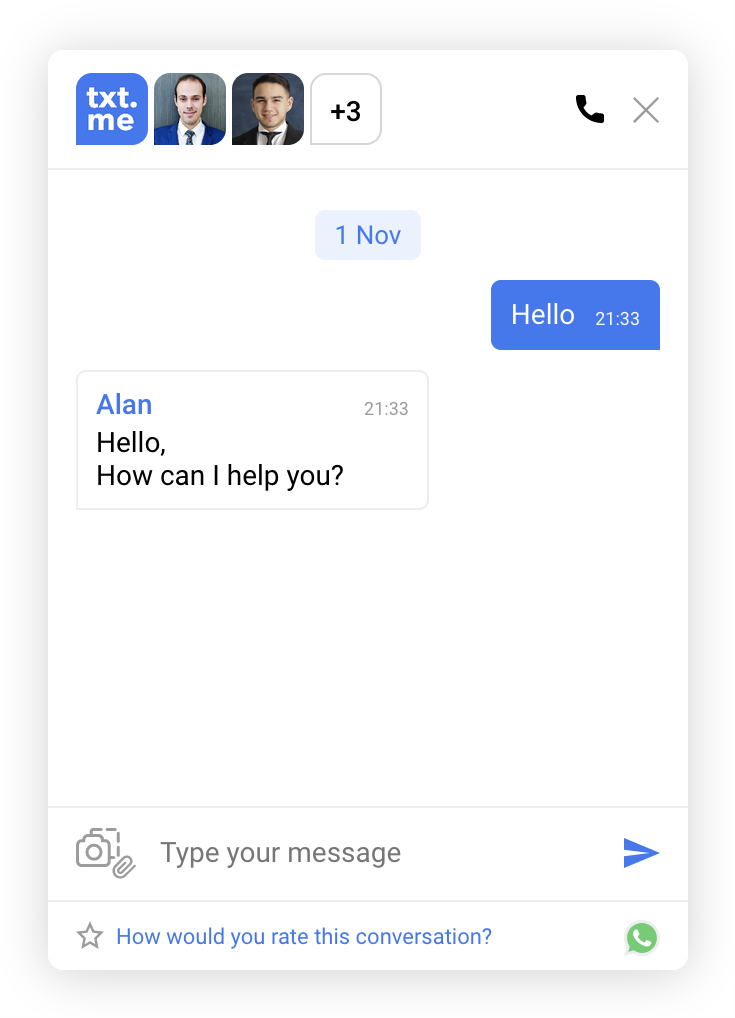
The company already had an FAQ page that covered most questions. Once the operators were connected to the chat box, they also reviewed earlier conversations and used them to build a better knowledge base.
Not every business has an FAQ yet, and not every business uses txt.me as its chat software. In that situation the operators handle onboarding themselves: they collect answers as they go and learn from real conversations.
What happens when the operator doesn't know the answer?
Some questions can't be resolved on the spot. A customer wants a refund, needs an account change, or asks something the FAQ doesn't cover.
When that happens, the operator creates a ticket for the in-house team and tells the customer the request has been escalated, with a reply promised within 24 hours. If the same question keeps coming up, it goes into the knowledge base. And with every conversation, the operators get to know the business better.
This escalation rule matters more than anything else in a BPO customer service setup. An outside operator should never promise a refund or change an account without authority. A clear ticket, with the conversation attached, keeps the customer informed and keeps the decision with your team.
What changed for the in-house team
Before outsourcing, the main team started each morning by going through unanswered chats from the night and writing to those customers to ask what they had needed. Monday mornings were worse. By then, most of those visitors had moved on.
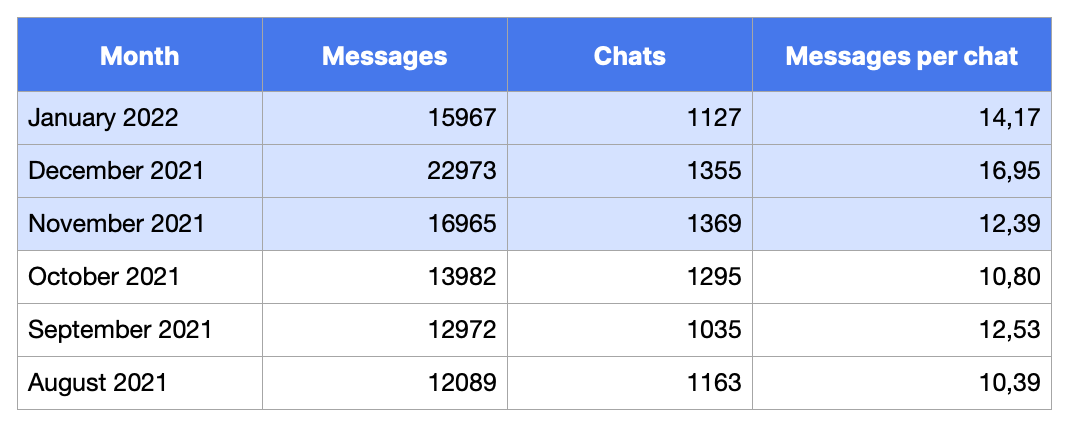
Once the operators were connected, lost chats disappeared, and churn began to fall. The second change was a clear rise in new trial sign-ups from North and South America. The likely reasons are faster replies during those time zones' business hours and operators who speak fluent Spanish. Negative public reviews also became much rarer.
Is BPO customer service right for your business?
It fits best if your chat volume is uneven across the day, your customers span several time zones, or you sell to Spanish-speaking customers and don't have bilingual staff. It fits less well if most of your conversations need deep account access or technical judgment that only your own staff have.
A practical way to test it is to start with the hours you can't cover today, usually nights and weekends. Measure unanswered chats and next-morning backlog before and after. Human Backup includes a 7-day free trial, so you can compare a week of covered nights against a normal week before you commit. See the Human Backup plans and hourly rates or talk to sales.