SMS customer service: a practical guide to two-way support
Make customer texting a real support channel. This guide covers two-way replies, US consent considerations, message examples, and AI-to-human handoffs.

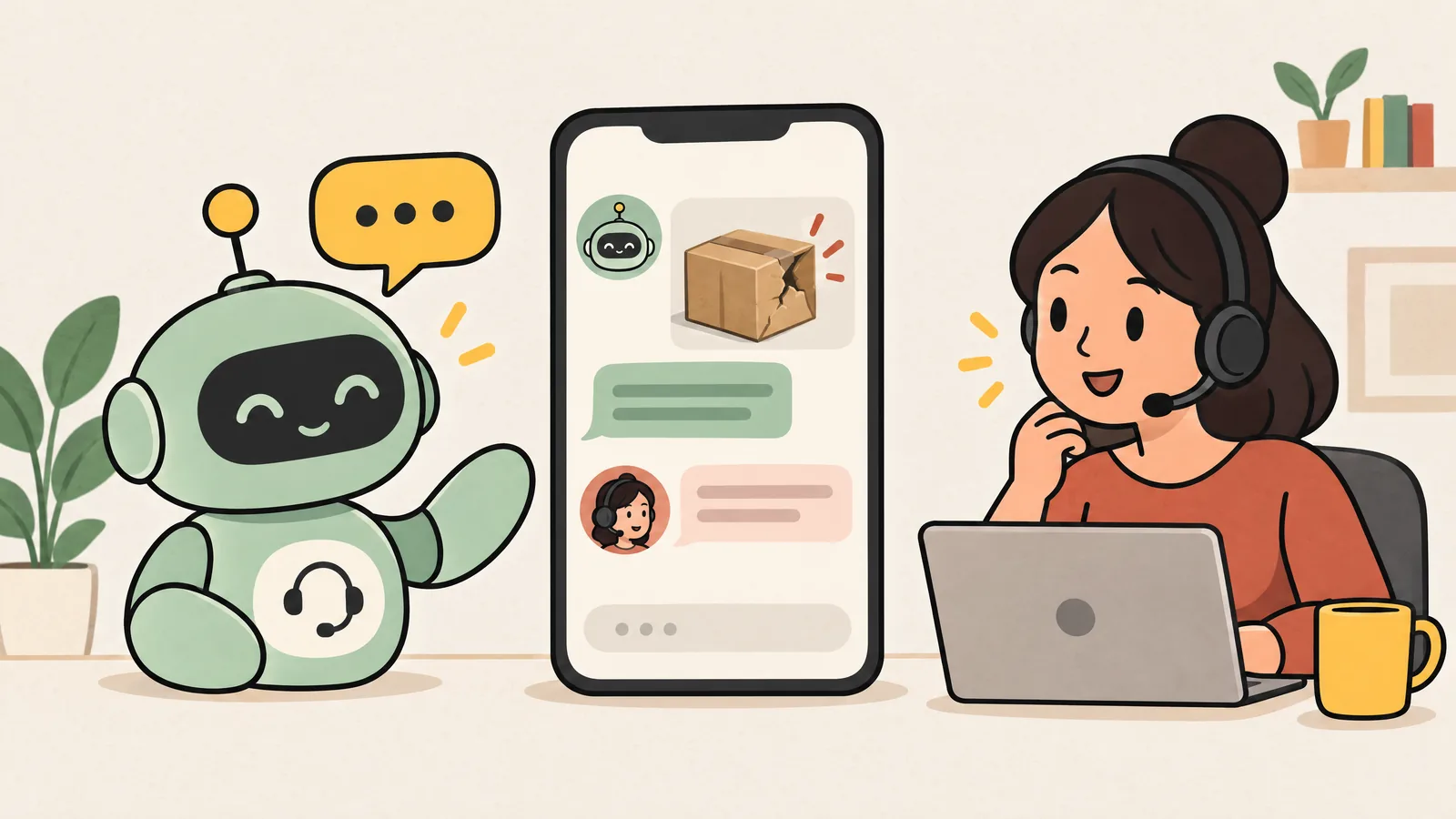
SMS customer service is two-way support through text messages: customers send questions to a business number, and an agent or AI assistant replies in the same conversation. It works best for short exchanges, such as delivery questions or appointment changes, with a clear route to a person when the issue needs judgment.
A shipping notice alone doesn't create a support channel. The test comes when a customer replies, “That package went to my old address.” Does someone see the message, own the problem, and explain what happens next? That's the difference your customer feels.
At txt.me, an AI-and-human live chat platform, website chat, WhatsApp, email, and SMS share one conversation thread. Its AI agent answers from a business's knowledge base and hands uncertain questions, complaints, money-related issues, or requests for a person to a human with the conversation context.
Where SMS customer service fits—and where it doesn't
Say a candle shop in Tucson sells a $28 gift candle and gets 400 website visits a day. A shopper texts from a parking lot: “Can I change the gift note before this ships?” They don't want to reopen a browser session or wait on hold. They need an answer they can return to later.
Text support suits that situation because the exchange can stay brief and asynchronous. Your agent answers when available; the shopper can reply after collecting their groceries. Neither side has to stay in a live session.
But SMS isn't a good home for every issue. A disputed subscription charge may require account verification and a careful explanation. A damaged gift set may need photos, which require multimedia messaging rather than plain SMS. A complicated installation problem may be easier to solve by phone or with a detailed email.
A useful channel policy connects the customer's task to the amount of information it needs:
| Customer task | Suitable starting point | Reason to change channels |
|---|---|---|
| Ask about a return deadline | Text reply with the applicable policy | An exception needs human review |
| Reschedule an appointment | Text with verified available options | The appointment involves sensitive information |
| Report a damaged parcel | Text acknowledgment | Photos need MMS or a secure upload route |
| Change an account's payment details | Text explaining the safe next step | Authorization belongs in a secure account flow |
You can keep the conversation connected even when the task changes channels. The distinction between separate channels and shared context matters here; our multichannel versus omnichannel guide explains it. A customer shouldn't have to restart the story because your team needs a photo.
A support number needs someone responsible for replies
A business sends a delivery update at lunch. The customer replies at dinner, and the message lands in an account that nobody checks. Your outbound system worked; your support process didn't.
Before publishing a text-support number, you'll need to confirm that it receives replies and sends them to a monitored business inbox. A personal employee phone can hide the history when that employee takes a day off. A shared inbox makes assignment visible and keeps the conversation available to the next shift.
The queue matters more than the acknowledgment
An automatic “We received your message” doesn't resolve the issue. Each incoming request needs an owner, a status, and an escalation route. Otherwise, two agents may answer the same message while another customer gets nothing.
Your status labels can be plain: waiting for an agent, waiting for the customer, waiting for another team, and resolved. The distinction is useful because a warehouse delay shouldn't look like an agent forgot to answer. A helpdesk ticketing system can carry the follow-up when the text exchange becomes a longer investigation.
Coverage needs the same clarity. If your team works weekdays, the after-hours reply can name the business, give the opening time and time zone, and explain another contact option. “We'll reply when we open at 9 a.m. Mountain Time on Monday” is more useful than “Someone will be with you shortly.”
You don't need to promise instant human support. You do need a promise the team can keep. Testing the number from an actual phone outside office hours will reveal whether the published experience matches that promise.
Consent belongs in the support workflow
A customer gives you a phone number to fix a missing order. A week later, they receive a sale announcement. Even if the promotion seems relevant, the business has changed the purpose of the relationship without making that change clear.
Your workflow can separate support permission from promotional permission. For customer-initiated texts, the reply should stay connected to the request. For business-initiated support updates, you can record what the customer agreed to receive, when they agreed, and how that agreement was collected. A checkout phone field alone shouldn't be treated as blanket permission for every future message.
The FCC's 2024 order on consent revocation discusses consumers' ability to withdraw consent for covered automated calls and texts by reasonable means. It recognizes standard replies such as STOP and also addresses other language that clearly communicates a desire to stop messages. That distinction matters operationally: a filter watching only one exact word can miss a customer's meaning.
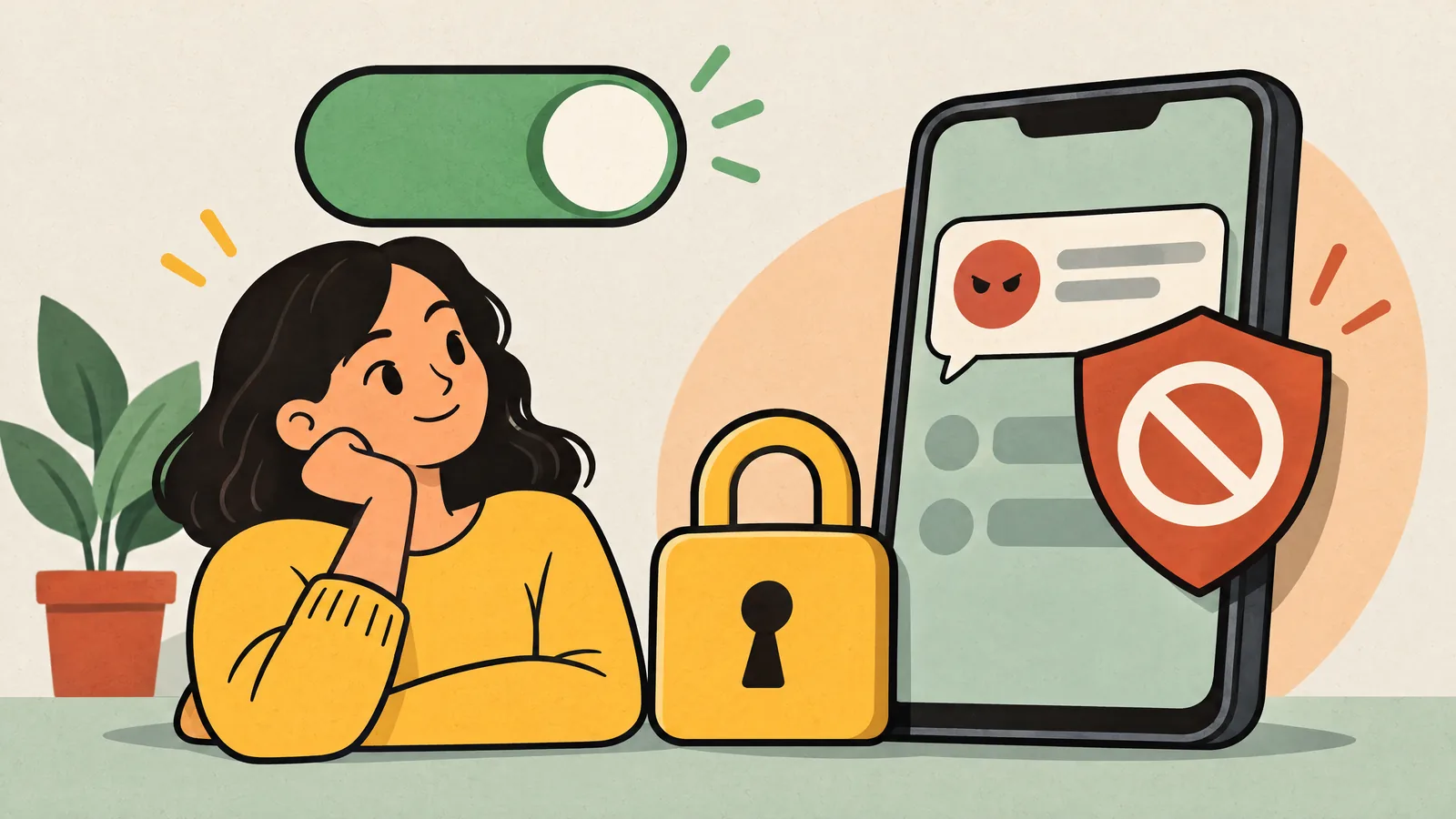
“Please don't text me again” deserves attention, even without a formal keyword. An opt-out should update the sending controls, not sit in an agent's private note while another system keeps sending. A fresh inbound question also shouldn't silently re-enroll someone in promotional messages.
Legal requirements depend on the message, the sending technology, and applicable federal and state rules. Your legal review can establish the permission language and suppression rules for your program; this guide isn't a substitute for that review. Operationally, processing clear opt-outs promptly reduces the chance that a queued message contradicts the customer's request.
There's a service trade-off here. If texting stops while an order investigation remains open, the agent needs an allowed alternative channel. Consent handling and case handling should work together rather than leave the customer stranded.
Short texts should move the problem forward
“Please provide additional details” sounds polite, but the customer still doesn't know what to send. A short message is useful only if it reduces uncertainty.
A practical reply usually identifies the business, addresses the known issue, and asks for the smallest safe next step. You can split a long explanation when it helps readability, but each message should have a reason to exist. Five tiny bubbles can feel more intrusive than one clear answer.
For the hypothetical candle shop, an initial reply might read:
This is the candle shop's support team. We can check the gift note before dispatch. What's your order reference? Please don't send payment details.
If the warehouse must check the parcel, the next reply can set a specific expectation:
I've asked our packing team to check it. I'll update you by 3 p.m. Mountain Time today, even if we're still waiting for an answer.
Those promises need to match real staffing. They aren't scripts to paste into every case. Your canned responses can provide structure while leaving policy decisions and deadlines for the agent to confirm.
Message length also affects delivery units. Wikipedia's SMS reference describes limits of 160 characters in the standard GSM 7-bit alphabet or 70 16-bit characters for an individual message. Longer messages can be split into segments with less room in each segment because the joining information takes space.
Smart punctuation and emoji can change the encoding, so the visible character count alone may mislead you. Your messaging tool's segment preview is a better cost check than counting words. You don't have to remove a customer's language to save a segment; you can remove repeated greetings and move lengthy policy explanations to a relevant help page.
AI should answer known questions and hand over exceptions
A customer asks about the return window, then adds, “Your last agent promised me something different.” The first question may have a clear policy answer. The second needs a person to inspect the earlier conversation.
AI can handle approved knowledge-base questions without making customers wait for routine information. It shouldn't invent an order status or approve an exception because the message sounds urgent. A model that knows your return policy doesn't automatically have access to your warehouse records.
You'll get safer answers when the approved material states the policy, exclusions, and escalation conditions clearly. Conflicting help pages create conflicting replies. When a policy changes, the support knowledge base needs an owner who removes the old version rather than leaving both available.
A handoff should include the attempted answer
Handoff means transferring the conversation from AI to a human. The customer shouldn't have to repeat the question, and the human shouldn't have to guess what the AI already said.

The transfer can include a short problem summary, the relevant policy, what information is missing, and any promise already made. The conversation history should remain available too; a summary can miss the wording that explains a complaint.
The AI's customer-facing message can be direct: “I'm passing this to a support agent to review the earlier promise. You don't need to send the details again.” An expected wait belongs in that message if your queue can support it.
Human review needs actual coverage. A queue without an available person isn't a completed handoff. Scheduled internal shifts or human support coverage can fill that gap. For a small team, restricting AI to policy answers outside office hours may be more honest than offering immediate review that nobody can provide.
Account changes need a safer route than ordinary texting
A message arrives from a familiar phone number: “Please change the delivery address and send me my account balance.” The number is useful context, but it doesn't prove that the person holding the phone is authorized to receive sensitive information.
In its 2025 digital identity guidance, NIST treats authentication through the public telephone network as restricted and identifies risks such as SIM changes and number porting. The guidance concerns authentication, rather than banning text support. It gives your team a reason to avoid treating phone-number possession as sufficient authorization for high-risk account actions.
A secure signed-in flow can handle those actions while the agent explains the next step by text. Your policy can distinguish a general shipping question from an address change, refund decision, or account recovery request. That prevents convenience from quietly becoming access permission.
Customers also have reasons to distrust unexpected links. The FTC's guidance on spam texts describes fake delivery notices and advises people to contact a company through a website or number they already know.
So your support message can explain where to go on your established website instead of depending on an unfamiliar shortened link. Agents shouldn't request passwords, full payment-card details, or login codes in the conversation. If a customer sends sensitive data anyway, an access and retention policy gives the team a defined response rather than leaving it searchable forever.
A pilot should measure unresolved replies, not message volume
Your dashboard reports hundreds of texts sent. That doesn't tell you whether customers got answers. A long exchange can mean careful service, or it can mean your agent kept asking the wrong question.
A small pilot can start with one bounded task, such as return-policy questions, and expand after the team checks the failed cases. Before launch, internal tests can cover an after-hours message, a plain-language opt-out, a request for a person, and a question the AI can't answer. These cases expose routing faults before customers meet them.
Your first response time, or FRT, measures how long someone waits for an initial reply. But an automatic acknowledgment and a useful answer aren't equivalent. Tracking them separately makes your first-response-time reporting more honest.
Customer silence isn't proof of resolution. A read receipt, where available, doesn't mean the problem disappeared either. For the pilot, a case can count as resolved when the agent records a completed action or the customer confirms that the answer addressed the request. You can still audit a sample for premature closure.
Repeat contact is another useful check. In a hypothetical pilot with 80 closed cases, suppose 12 customers contact you again about the same issue within seven days. The repeat-contact rate is 12 ÷ 80 × 100 = 15%. That figure doesn't identify the cause, but reading those exchanges can reveal missing information or promises the team didn't keep.
Cost needs a case denominator too. If a hypothetical pilot spends $120 on agent time and $24 on messaging to resolve 72 cases, direct cost per resolved case is ($120 + $24) ÷ 72 = $2. This excludes software fees and management time; adding those costs gives you a fuller comparison. It isn't a pricing claim or an expected result.
A fast reply can still create expensive rework. Your launch decision should consider unanswered requests, repeat contact, and opt-out handling alongside speed. If customers keep returning for clarification, improving the answer may matter more than adding another automation.
Every customer reply deserves a named owner
A customer texts because the channel is convenient. They're trusting your team to turn a short message into an answer without making them chase another inbox.
Good SMS customer service starts with a narrower promise than “text us anything”: a published scope, realistic response hours, and someone responsible for exceptions. AI can answer known questions, but a human must be reachable when the policy stops being enough.
For your first launch, the decisive test is a reply to an ordinary delivery notice. If that reply reaches an assigned agent with the history intact and a clear next step, you've built a support channel worth expanding.