Omnichannel customer service without lost context
A shared inbox is a starting point. This guide explains how to carry context across channels, give AI a clear handoff policy, and measure whether issues get resolved.

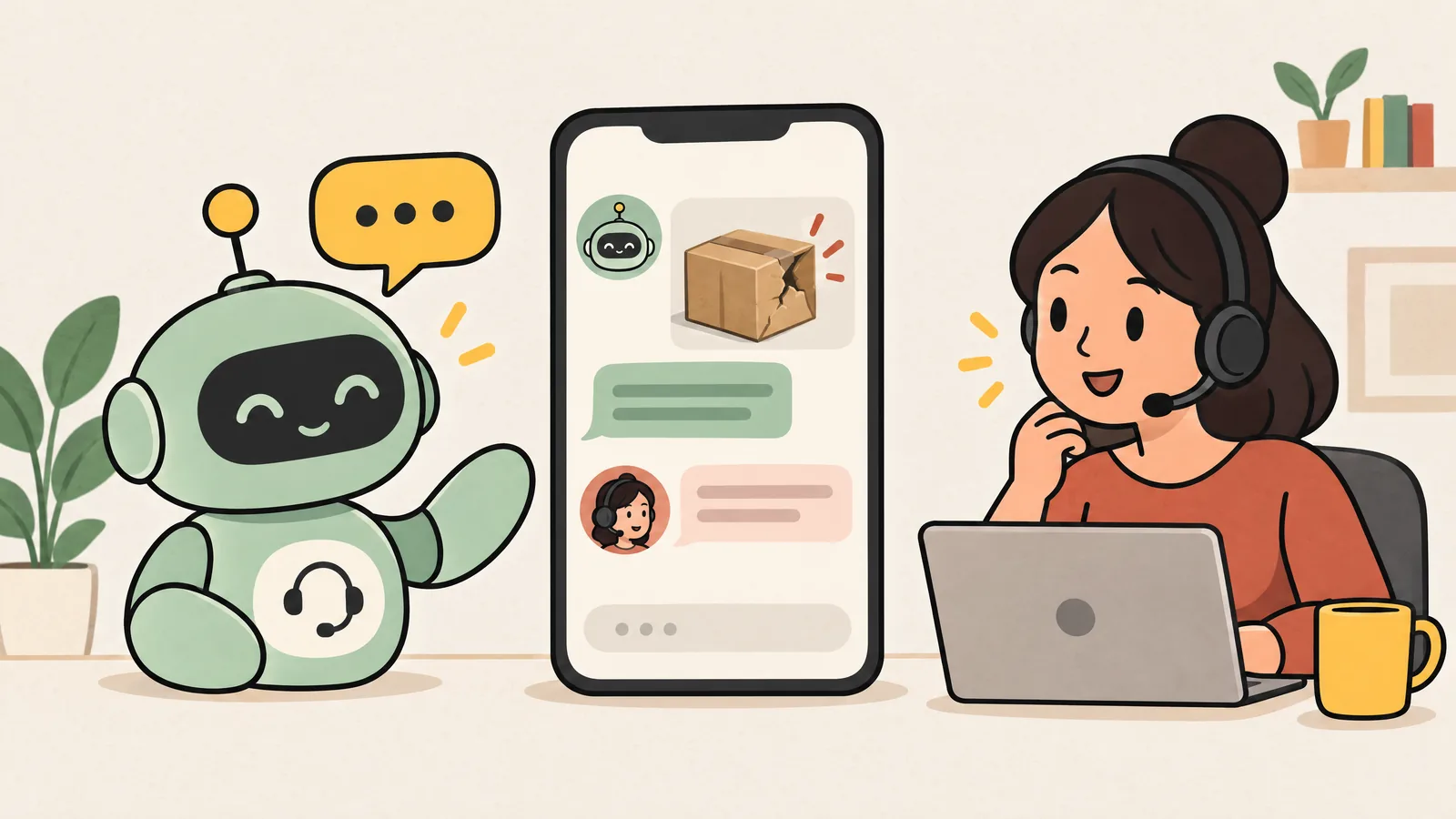
Omnichannel customer service connects your support channels so a customer's issue can continue across website chat, email, SMS, or WhatsApp without losing relevant history. The team shares the issue's status and agreed next action, rather than treating each message as a new request. Customers can change channels without rebuilding the conversation.
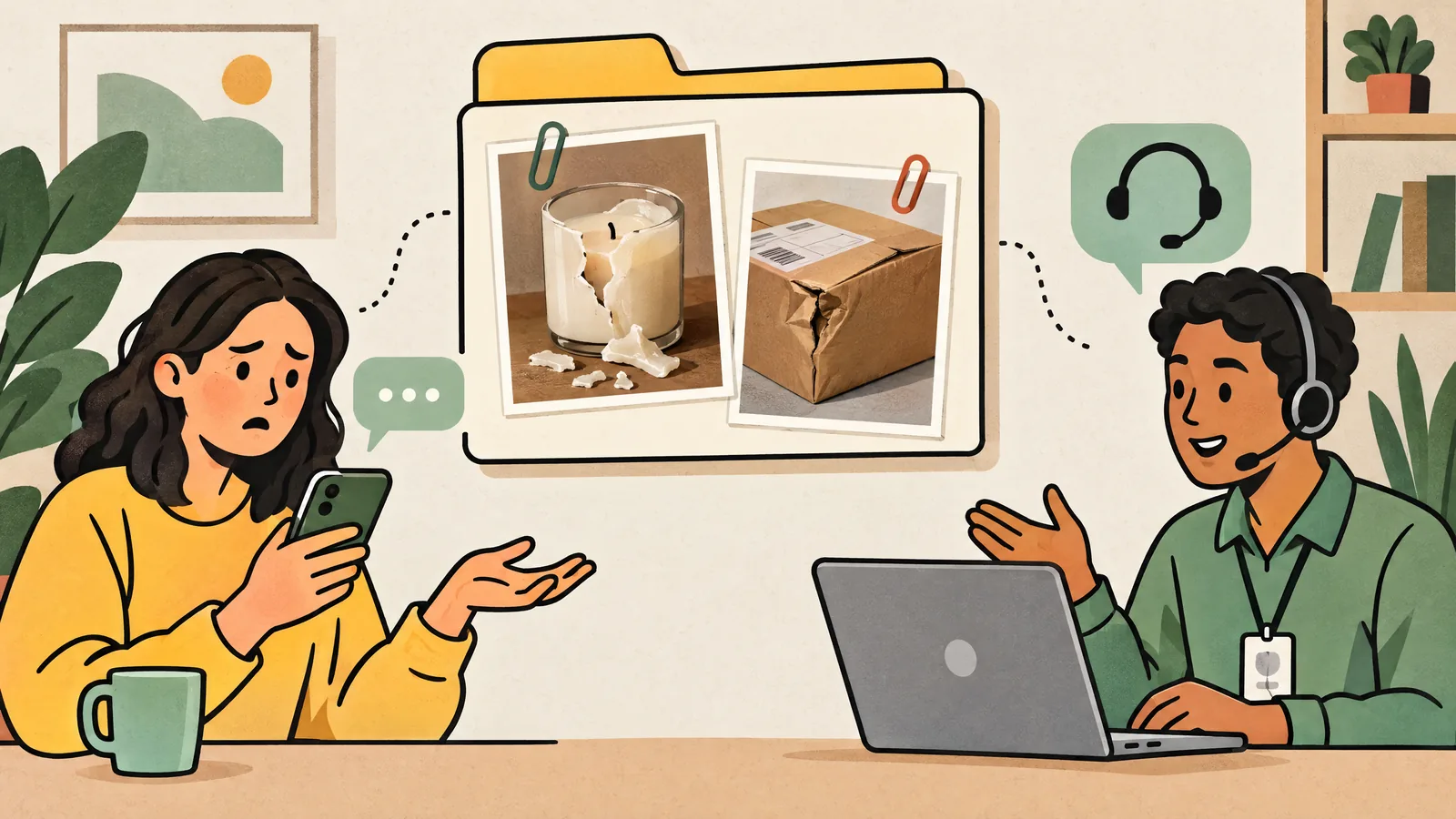
Say a candle shop in Tucson sells $28 glass-jar candles. A customer reports a cracked jar in website chat, then emails a photo after getting home. If the email agent asks what happened, the business has several contact options but hasn't connected the service behind them. That's the gap worth fixing.
At txt.me, we combine an AI agent with human operators and bring website chat, WhatsApp, email, and SMS into one conversation thread. That gives us a useful starting point for this guide: shared messages help, but your team still needs rules for identity, responsibility, and follow-through.
What makes omnichannel customer service different?
A team can answer messages in several places and still make customers repeat themselves. Email might use one queue while chat uses another, with each agent following a different refund policy. The channel count looks good. The customer's experience doesn't.
Multichannel support means offering multiple contact channels. Omnichannel support connects those channels around the customer's journey and the issue being handled. A single inbox can support that connection, but it doesn't automatically establish matching rules or decide who owns an unresolved request.
Verhoef, Kannan, and Inman's 2015 peer-reviewed paper, hosted by the University of Groningen, describes omnichannel retailing as a broader view of channels and how shoppers move between them. Applying that perspective to support shifts your attention from individual replies to the whole service journey. The paper concerns retailing; the operating rules below are practical recommendations for support teams.
A useful test is whether the next agent knows what has already happened and what they're expected to do. If they can see the transcript but can't identify the pending decision, your connection is incomplete. Our guide to multichannel versus omnichannel communications explains the distinction further.
The first connection should follow an existing channel switch
Small teams often add a new messaging channel before deciding who will monitor it. Then a customer sends the same delivery question through chat and WhatsApp because neither reply explains when a person will investigate. More channels have created more work.
Your first connected journey can be narrow. For the Tucson shop, chat-to-email makes sense when customers need to send damage photos after leaving the website. Another business might prioritize WhatsApp-to-human support because its shoppers already use that route. The choice depends on observed requests, not a wish to be everywhere.
You can review recent unresolved conversations and note where customers changed channels, what prompted the change, and what information went missing. A switch caused by an attachment limit needs a different fix from a switch caused by silence. This review also reveals which channels are genuinely useful.
Each supported channel needs an honest coverage promise. Chat may offer immediate help during staffed hours; email may carry a later investigation. A message such as “We're checking the shipment and will email you by 3 p.m. Mountain Time tomorrow” gives the customer a reason to wait instead of opening another conversation.
WhatsApp may be valuable if customers already prefer it, but adding it creates another operational commitment. The WhatsApp website installation guide addresses the connection itself. Before launch, you'll also need a named queue owner and a fallback when that person is away.
A shared inbox needs an issue record
A transcript preserves the customer's words. It may still leave the receiving agent searching through a long exchange to find an order reference or an unfulfilled promise. During a busy shift, that search is exactly where another unnecessary question slips in.
The practical addition is a short issue record beside the conversation. It captures the service state: what the customer needs, what evidence exists, and what action is still pending. It's separate from the customer profile because the same person can have a damaged delivery and an unrelated billing question open at once.
For the candle example, a compact record might look like this:
| Record field | Illustrative entry |
|---|---|
| Customer link | Verified account email; order reference attached |
| Issue | Glass jar arrived cracked |
| Evidence | Customer's damage photo attached |
| Previous action | Replacement requested; no approval yet |
| Owner | Shipping support queue, with a named agent assigned |
| Next action | Agent checks replacement availability |
| Promise | Email update by the stated time, even if still pending |
The entries are hypothetical, not customer data. They show why “customer contacted us” is an inadequate note: it doesn't tell the next agent which decision remains open.
Identity matching needs a cautious rule
An email address, browser session, and phone number aren't automatically proof of the same person. A household may share a phone. Someone may be asking about an order placed with a different address.
Your team can use verified identifiers to link conversations and keep uncertain matches separate until confirmed. The agent can request a reference through an approved verification process before exposing order details. It's reasonable to ask for security confirmation; it isn't reasonable to ask for the damage story again because the first agent's notes disappeared.
Incorrect matching is worse than a little extra checking. It can disclose another person's information and produce the wrong resolution. For that reason, convenience shouldn't override your identity rules.
An owner needs a deadline, too
A queue label doesn't tell the customer who will act. When the shipping team needs a warehouse answer, a named support agent can retain responsibility for the update while the warehouse handles its own task.
A helpdesk ticketing system can organize escalation, private notes, and unresolved work. Your operating rule supplies the accountability: transferring a task doesn't erase the original promise. If there's no warehouse answer by the deadline, the customer still gets a truthful progress message.
AI needs a handoff policy before it needs more channels
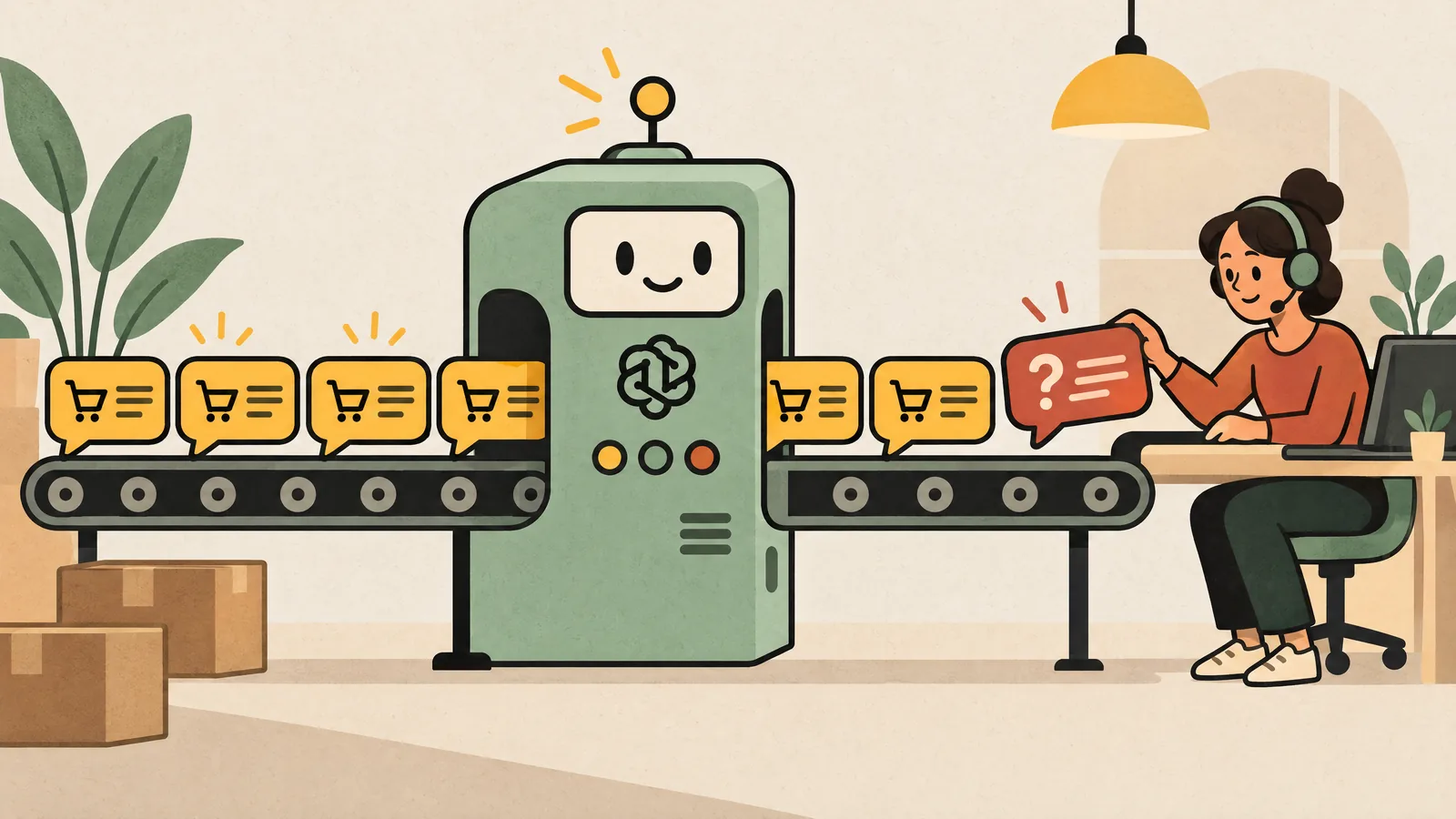
An AI agent may answer the candle shop's standard shipping question correctly, then struggle when a customer describes damaged glass and asks for a refund. Without a clear boundary, it might repeat a policy while the customer waits for someone with decision authority. Nobody has accepted responsibility.
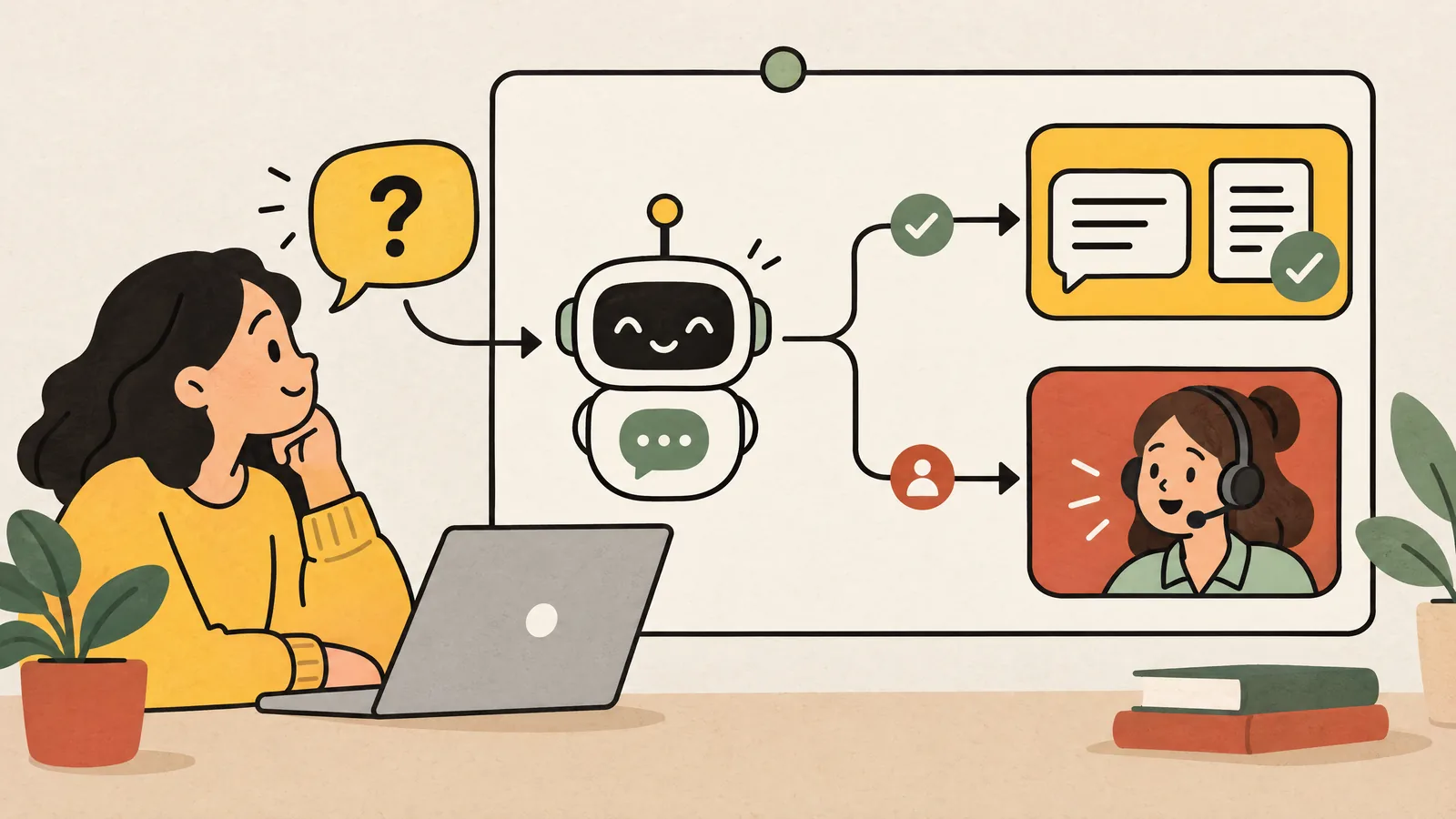
A handoff is the transfer of a conversation from automation to a person, or between people. It should carry the issue record and the reason for transfer. For AI, that reason may be uncertainty, a request for a person, or a decision involving money or a complaint.
NIST's AI Risk Management Framework, published in 2023, addresses this responsibility explicitly. Its GOVERN 3.2 provision calls for policies that define and distinguish roles for human-AI configurations and oversight. A support team's concrete application is to document which answers AI may give and which decisions require a human.
Routine knowledge-base questions are a sensible starting point because approved answers can be checked against published policies. AI shouldn't claim it has issued a replacement unless the relevant system confirms that action. Answering a question and completing a transaction are different capabilities.
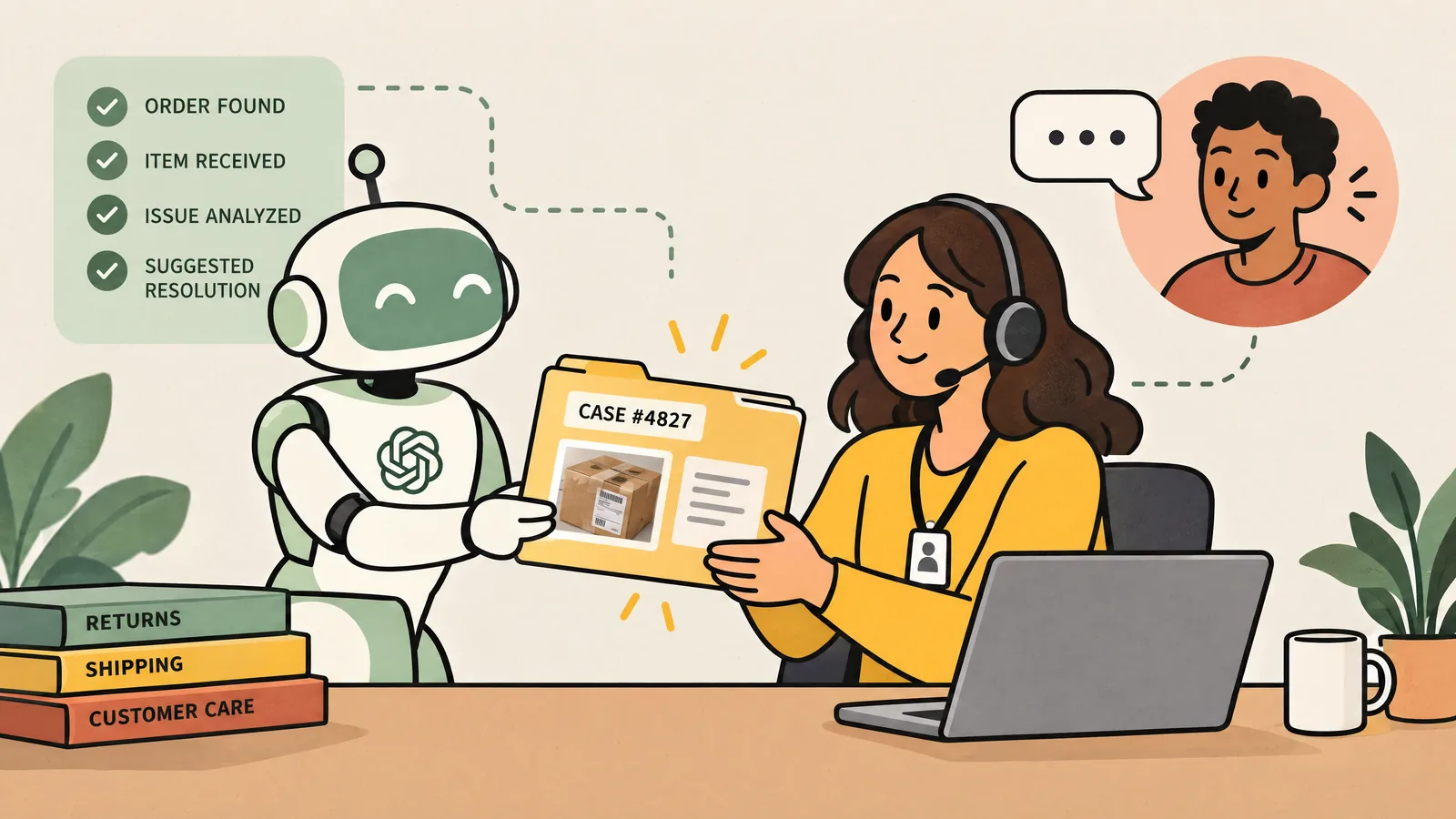
For the receiving agent, the handoff note can identify the requested outcome, evidence already collected, and any answer that needs checking. The original messages should remain available because a summary can omit an important qualification. The agent shouldn't have to trust a generated summary blindly.
And the customer needs an honest waiting message. If nobody is available, automation can explain that the issue is queued and provide the actual follow-up window. Human support coverage is one way to staff that boundary; your own employees may fill it instead. Either way, coverage and authority need to match the promise.
Connected history still needs privacy and access limits
Sharing every detail with every agent can look convenient until a damage photo reveals a shipping label, a private note reaches the wrong team, or an old attachment stays available indefinitely. Connecting channels increases the places where information may be seen.
NIST's 2020 Privacy Framework announcement describes a voluntary tool for managing privacy risk arising from products and services. It isn't a law or a certification. For support operations, the useful lesson is to decide how information will be used and protected before copying it across systems.
Your issue record can retain the order reference without duplicating the full address in every summary. Agents can use approved secure payment processes rather than requesting card details in ordinary chat. Access can follow job responsibilities, with retention periods set according to actual business needs and applicable obligations.
These limits don't prevent useful continuity. They make it safer to preserve the facts that matter. A shipping agent needs the delivery evidence; they may not need unrelated billing notes. When choosing software, you'll want to check how permissions, attachment deletion, and conversation exports work rather than assuming a shared inbox includes every control.
Accessible support needs more than an alternative channel
A customer who can't operate your chat widget shouldn't have to search the footer for an email address and restart the request. An alternative contact route helps, but inaccessible forms still create needless work before the transfer even begins.
The W3C's WCAG 2.2 Recommendation from 2023 includes requirements for keyboard operation and accessible status messages. Its Redundant Entry criterion, 3.3.7, addresses information that must be entered again within the same process: it should be filled automatically or available to select, subject to stated exceptions.
That criterion doesn't require every separate messaging service to share every field. It does offer a useful test for your own support flow. Can a customer open chat, attach evidence, and request follow-up using a keyboard? Can a screen reader identify a new status message? Does an escalation form reuse information already supplied where appropriate?
You can test those actions with the actual widget and forms, rather than judging accessibility from appearance. Reusing valid information reduces customer effort; keeping a secure verification step remains appropriate when the situation requires it. Both goals can coexist.
Measure resolution across the issue, not each inbox
A channel dashboard can record a fast reply while the customer is still chasing an answer elsewhere. Closing the chat window may look like a completed conversation even though the refund request remains open. Those measurements aren't describing the same outcome.
For omnichannel customer service, your measurement unit should include the issue, linked across its channel changes. Channel-level reporting is still useful for staffing, but it can't tell you alone whether the customer got the promised result.
A practical review can pair first response time, or FRT, with resolution time and repeat-explanation rate. FRT measures the wait for the initial reply. Resolution time runs from the first report to the agreed outcome; repeat-explanation rate records how often customers had to restate facts already available after a channel switch.
Here's a hypothetical audit calculation. If you review 40 channel transitions and find 14 required customers to repeat previously supplied facts, the rate is 14 ÷ 40 × 100 = 35%. That's an illustrative calculation, not an industry benchmark. Your reviewer should distinguish missing context from a legitimate security check.
You'll also want to inspect reopened issues and promises missed during transfers. A high AI containment rate—the share handled without a person—can be misleading if customers leave without an answer. Our guide to customer service metrics explains related measurements. Together, these checks help prevent a quick automated reply from hiding unfinished work.
A small pilot exposes the failures an inbox demo misses
A software demonstration often follows a clean conversation with a known customer. Real requests arrive with missing references, duplicate messages, and a shift change halfway through. That's where the operational rules get tested.
Your first pilot can follow one common issue through the channel switch you've chosen. The candle shop could use damaged-delivery reports from chat to email, with human approval required for replacements. A narrow pilot makes it easier to identify why a transfer failed.
Before expanding, the team can test a customer who changes email addresses, a photo received after the agent's shift, and an AI answer that needs correction. Another useful test is a second message arriving while the first issue is still open. The receiving agent should be able to distinguish an update from a separate request.
The pilot passes when the evidence survives, the owner is identifiable, and the next promise remains visible. It doesn't need perfect automation. If a transfer still relies on someone's memory, that specific gap deserves attention before another channel joins the workflow.
The next message should advance the same issue
A customer who returns with a photo is contributing new evidence. Their next reply should help your team act, rather than force them to repeat the original complaint. That's the practical standard for connected support.
For your next review, one unresolved case is enough to start: can another agent see the current decision, identify its owner, and explain when the customer will hear back? If any answer is missing, a clearer issue record or responsibility rule may help more than an additional contact channel.
References
- Verhoef, Kannan, and Inman. From Multi-Channel Retailing to Omni-Channel Retailing. Journal of Retailing, 2015; University of Groningen repository. Source.
- NIST. AI Risk Management Framework 1.0, 2023; Core, GOVERN 3.2. Source.
- NIST. NIST Releases Version 1.0 of Privacy Framework, January 16, 2020. Source.
- W3C. Web Content Accessibility Guidelines 2.2, October 5, 2023. Source.