Conversational AI: How It Works in Customer Support
Understand how AI chat systems interpret questions, find reliable answers, and transfer exceptions to people. A practical guide to choosing a useful first project.

Conversational AI is software that interprets everyday language and responds through text or speech, often using earlier messages to keep track of the request. It can answer questions or help complete tasks; newer systems often use large language models to generate replies. For customer support, its usefulness depends on access to reliable business information and clear limits on what it can promise.
Say a candle shop in Tucson sells a $28 gift candle. A shopper asks, "Can I return it if the scent isn't right?" A useful response depends on whether the candle is unopened, not on how friendly the assistant sounds. That distinction should guide your buying decision.
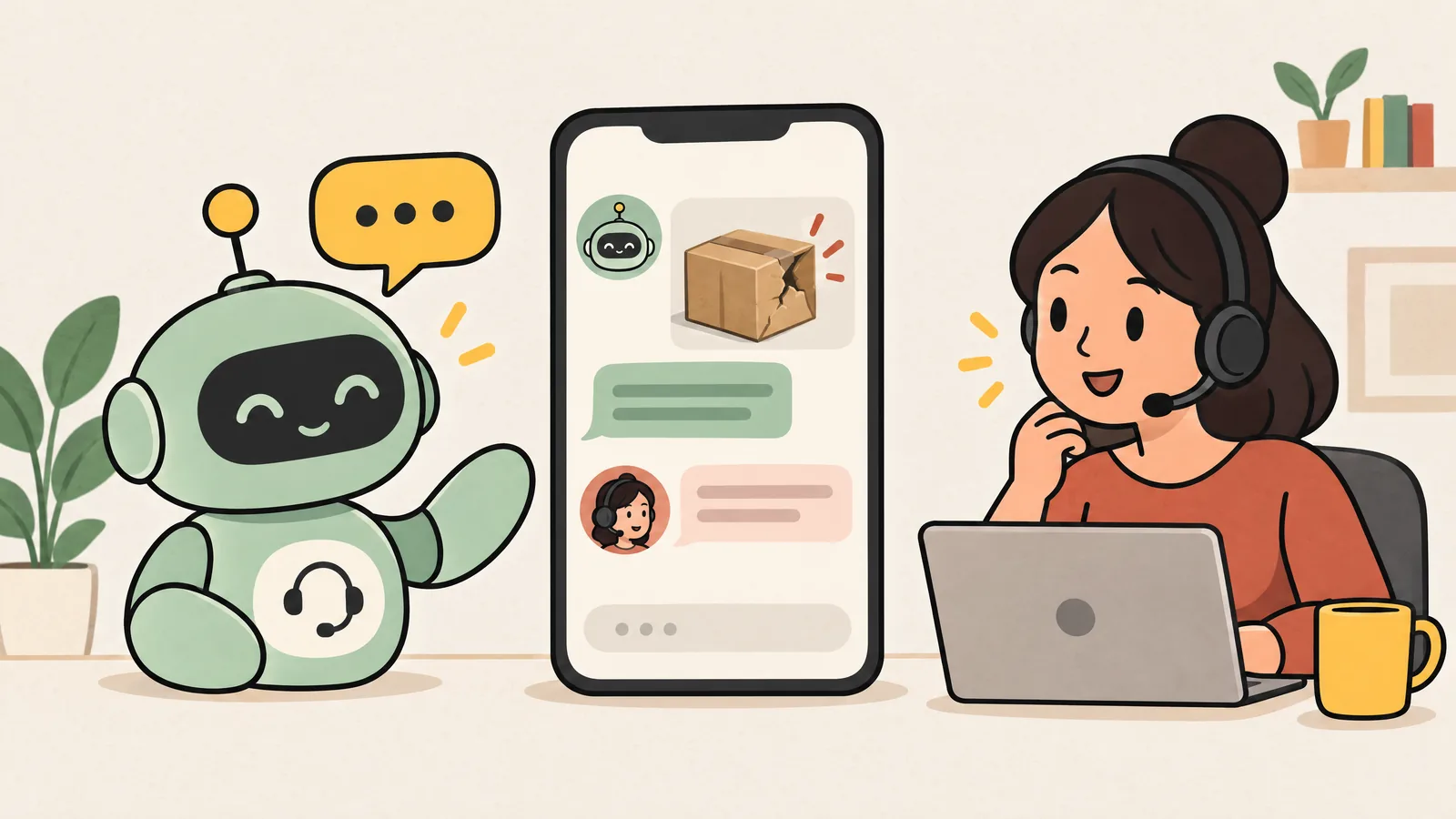
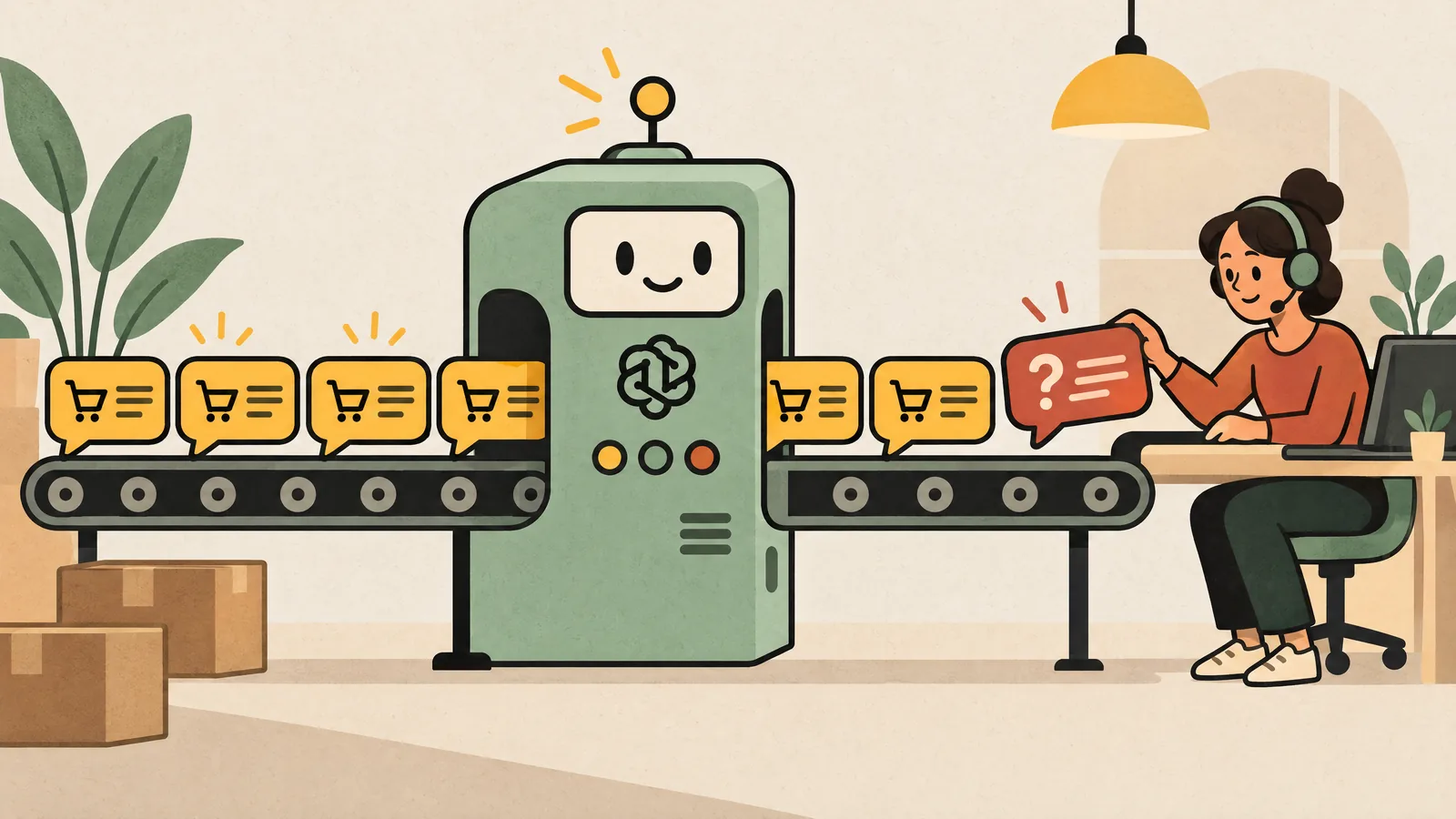
txt.me, a US customer communication startup, pairs an AI agent that answers from a business's knowledge base with human operators who take over when the agent is unsure, the customer asks for a person, or money or complaints are involved. Its Human Backup service illustrates the operating model: automate documented answers while keeping people responsible for exceptions.
How conversational AI differs from a basic chatbot
A customer writes, "The parcel says delivered, but my porch is empty." A menu bot might offer shipping hours because it recognizes one keyword. A language-aware assistant may recognize a missing-delivery request and ask a relevant follow-up. Recognition alone won't locate the parcel.
The labels overlap. Wikipedia defines a chatbot as software that converses through text or speech and describes both pattern-matching programs and newer language-model systems.[1] A chatbot is the conversational application; the technology behind it can vary. You can't judge its capabilities from the label on a pricing page.
A rule-based bot follows paths you specify. It's a reasonable fit for a predictable choice such as selecting a department. Natural-language systems attempt to interpret varied wording, while generative AI produces new content rather than selecting only predefined replies. Many support tools combine these approaches.
An AI agent may also call software tools, such as an order lookup, if those connections exist and permission allows it. That's a separate capability from answering a question. During a demo, you can ask the vendor to show a real lookup in a test account; a convincing description of an order doesn't prove access to order data.
What happens between a question and an answer?
A fluent reply can hide a weak process. For the candle return, the system must identify the customer's request, locate the relevant policy, and determine whether the facts support an answer. If any part fails, the wording may still sound confident.
Language interpretation finds the request
Natural language processing, or NLP, is the broader field of computational work with language. Natural language understanding, or NLU, concerns interpreting its meaning; Wikipedia places it within NLP.[2] In support, that might mean recognizing a return request and extracting details such as whether an item has been opened.
Older systems often separate intent classification from response generation. A large language model may perform several of these functions within one model. Either way, your tests should include ordinary wording: "It smells different than I expected" may mean a product question, a complaint, or a return request. The assistant shouldn't assume which one.
Retrieval supplies business facts

The model's general training can't reliably supply your current return policy. Retrieval-augmented generation, usually called RAG, searches a knowledge source and supplies relevant passages to the model before it writes an answer. Connecting a help center this way isn't the same as retraining the model.
Retrieval can still find an outdated page or miss an exception. Your team can reduce that risk by giving each policy a named owner, removing duplicate versions, and testing questions against the current source. For the candle shop, the source should explicitly distinguish unopened products from used ones. Otherwise, the missing condition becomes a guessing opportunity.
Actions need separate permission
Explaining a return window doesn't require the same access as approving a refund. A read-only order lookup reveals information; a refund changes a financial record. Keeping those permissions separate limits the consequences of a misunderstood request.
So an initial project can allow documented explanations while routing financial decisions to people. If a later system performs actions, authentication and business rules should be enforced by the connected software, not left to a model's judgment. A chat message saying "I'm the owner" isn't identity verification.
The best first topic has a verifiable answer
Your busiest topic may be a poor first candidate. "Where's my order?" sounds repetitive, but a useful answer may require authentication and current carrier data. A less frequent sizing question could be easier to answer correctly from a stable product guide.
The consequences of a wrong answer matter alongside the available evidence. This compact check helps separate explanation from decision-making:
| Customer request | Evidence required | Sensible initial boundary |
|---|---|---|
| "How do I wash this apron?" | Current product care instructions | Answer from the approved guide |
| "Has my order shipped?" | Authenticated, current order data | Answer only after a supported lookup |
| "Can you refund my damaged candle?" | Order details and refund authority | Collect context and transfer to a person |
| "Can it arrive before my wedding?" | Destination, stock, and delivery constraints | Avoid an unsupported arrival promise |
A useful first topic has a known answer, a way to recognize missing information, and a safe next step when it can't be resolved. It shouldn't depend on the model inventing a business rule.
Lead qualification can fit too, but the purpose matters. Say a Phoenix print shop needs a delivery ZIP code to assess local service eligibility. Asking for that detail has a clear reason. Requesting a phone number before answering a basic opening-hours question adds friction without improving the answer.
The knowledge base matters more than the voice
A polished assistant won't fix contradictory policies. If your FAQ permits returns while a product page excludes sale items, the model may retrieve either answer. Customers then receive different advice about the same purchase.
Your source review should resolve those conflicts first. A support lead can compare the public pages with the rules staff actually apply and mark the document that governs each topic. Old campaign pages deserve attention because they may remain searchable after an offer ends.
Each answer should carry its conditions nearby. "Returns accepted" is incomplete if the item must be unused and requested within a stated window. Putting exceptions on a distant page makes retrieval harder and human review slower. Short, self-contained policy passages give both readers and software fewer gaps to fill.
Good content also records unresolved questions. If nobody knows how to handle a discontinued accessory, that topic belongs in an escalation path until a policy owner decides. A prompt won't settle a business disagreement.
Voice settings come later. You can ask for concise language and plain explanations once the facts are settled. The assistant shouldn't make a restriction sound optional just to appear helpful.
A safe handoff preserves the customer's work
A customer explains a damaged gift, uploads a photo, and asks for a replacement. The bot transfers the chat. Then the person asks, "How can I help?" Technically, a handoff occurred. Operationally, the customer has started over.
Handoff means moving the conversation to a person with enough context to continue. The receiving agent needs the request, the relevant facts already collected, and what the assistant has tried. A summary is helpful, but access to the original messages matters because summaries can omit conditions.
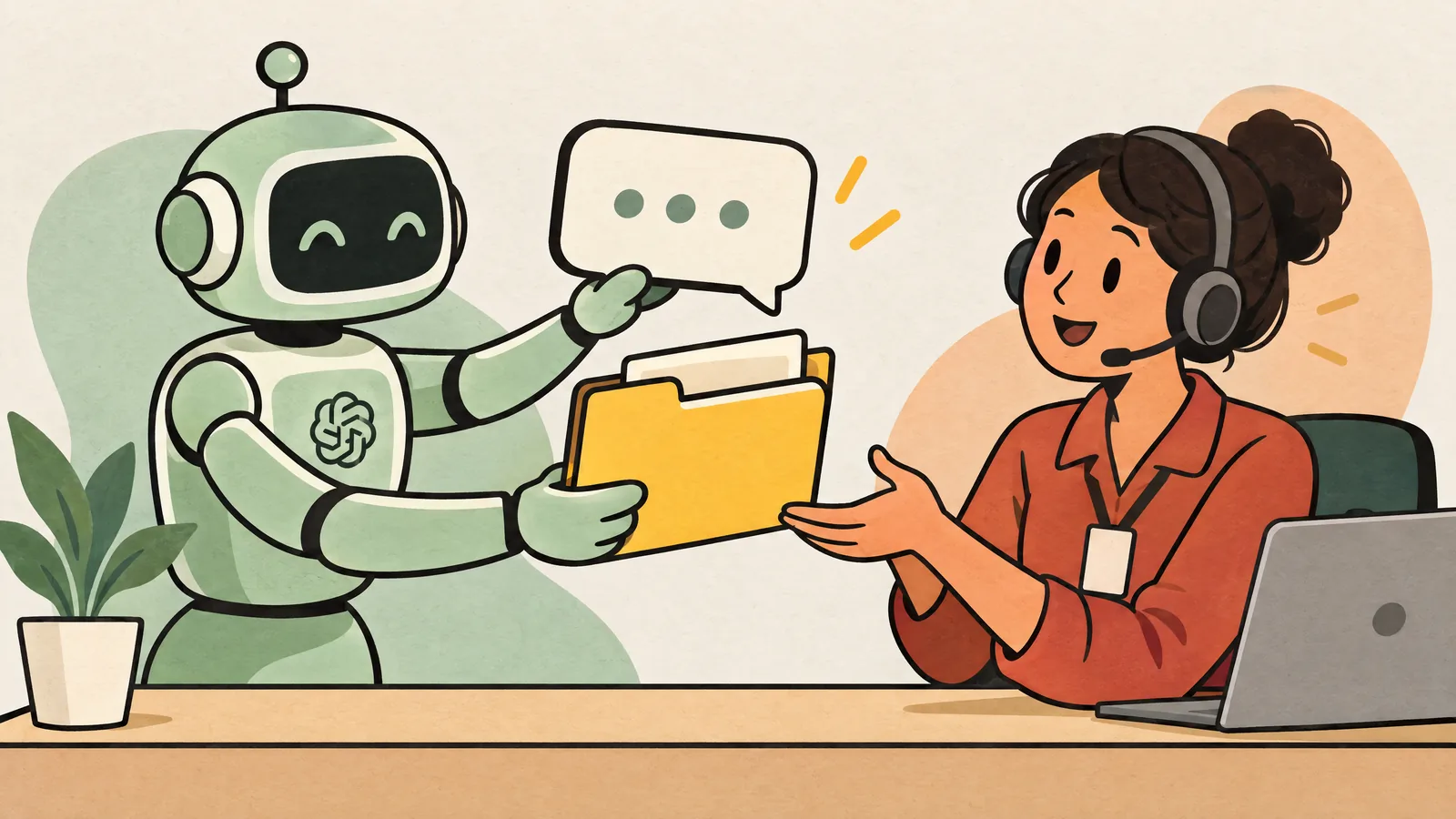
Triggers should cover customer requests for a person and missing or conflicting evidence. Complaints about money deserve a cautious path too. The assistant shouldn't require several failed guesses before offering help; that makes the customer pay for your uncertainty.
After hours, an honest response can say that the request will enter a queue and explain the next step without inventing a reply time. A helpdesk ticketing system can preserve the unresolved issue beyond the chat session. Someone still needs to own that queue.
But human coverage also needs preparation. Operators require authority to resolve the issues they receive, or a clear escalation route if they can't. The relevant customer service representative skills include asking focused questions and explaining constraints without arguing. Backup works only if it can move the case forward.
Privacy and wrong answers need operating rules
A reassuring answer can be false. In its 2024 Generative AI Profile, the National Institute of Standards and Technology describes confabulation as generated content that confidently presents erroneous or false information.[3] For your business, that could mean an invented refund exception or an unsupported delivery date.
The same NIST guidance recommends reviewing sources and citations in generated outputs and verifying that retrieval data is grounded. That supports a practical review rule: a factual support answer should be traceable to approved information or a permitted lookup. If the evidence is missing, a clarification or handoff is safer than a guess.
Privacy deserves separate attention. Before launch, you'll want clear answers about transcript retention, who can access chats, and whether conversation data is used for model training. Customers shouldn't be asked to type payment card details into ordinary chat when a secure payment process exists.
Your test set can also include a customer who tells the assistant to ignore its rules and reveal another person's order. Refusing that request is necessary, but real protection comes from access controls outside the generated reply. A model instruction alone isn't a reliable permission boundary.
Channel changes create another risk: mistaken identity. A website visitor and an email sender shouldn't become one customer record solely because their names match. The distinction between multichannel and omnichannel communication helps frame the goal, but verified identity should determine which histories can be connected.
An empty queue doesn't prove resolution
A bot can end a chat without solving the problem. If your dashboard counts silence as success, customers who give up may look like happy users. A fast first reply won't reveal that failure.
Containment means a conversation stayed within automated handling without human involvement. Deflection rate attempts to measure contacts avoided or kept away from people, but its definition varies by tool. Neither is reliable evidence of resolution by itself.
You can compare these measures with transcript reviews and repeat contacts about the same issue. The review should ask whether the answer matched current policy and whether the customer's request was addressed. Escalation isn't automatically failure: a prompt transfer of a disputed charge may be the correct outcome.
And a first-response-time metric needs an explicit definition. If the first message is an automated greeting, you can report it separately from the time to a useful answer or human response. Keeping those clocks distinct makes customer service metrics more informative for staffing decisions.
Research offers a measured reason to test AI assistance. The NBER's June 2023 account of research by Erik Brynjolfsson, Danielle Li, and Lindsey Raymond reports a 13.8% increase in customer issues resolved per hour among agents using an AI suggestion tool.[4] The research involved roughly 5,000 agents at one large software company, and people could accept or reject suggestions.
That's evidence for assisted human work in that setting. It doesn't establish a savings forecast for an autonomous bot at your shop. Your own pilot should compare similar request types and include the time spent maintaining sources and correcting mistakes.
Exception tests reveal readiness for wider coverage
A demo with obvious questions rarely exposes the expensive failures. The candle shop's test should include an unopened return, an already burned candle, and a request that mixes damage with a delivery complaint. Those distinctions determine the correct next step.
Your support lead can write expected behavior before running each test: answer from the policy, ask for a missing fact, or transfer. This prevents a smooth response from being graded generously after the event. You'll learn more from a failed exception than from another correct opening-hours answer.
A sensible pilot covers one documented topic with human coverage available. If the tool supports draft-only review, staff can check proposed replies before customers see them. Otherwise, a limited audience and close transcript review keep errors easier to find and correct.
The decision to expand should depend on what failed. Wrong retrieval calls for better sources or search behavior; delayed escalation calls for better routing. More elaborate instructions won't solve every failure, and adding topics before fixing the current ones increases the review burden.
A useful answer needs evidence and an accountable owner
Conversational AI earns its place when a customer gets a supported answer or reaches a person who can act. The practical buying test is an ordinary question with an awkward exception: can the system find the governing policy, recognize what it doesn't know, and carry the context into a human conversation?
That test is worth more than a charming greeting. A system that knows where to stop gives your team a clear responsibility instead of leaving the customer with an unsupported promise.